

Would you prefer a printable PDF? Sign up here to get PDF copies of these letters by email.
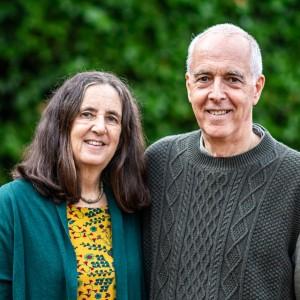
Andrea and Mark Hotchkin
September 2026
Loaves and Fishes
Dear Friends,
Its now nearly 2 months since we arrived back in Bardaï, it has been a busy time initially moving back into our home that we left nearly 2 years ago and then starting work in the hospital. If you would like to know more about the initial 3 weeks, we have already shared our experiences and impressions in a copy of Bardaï Brief, a newsletter through Wakefield Baptist Church. If would like to be added to the mailing list, please send an email to wbc.centremanager@gmail.com
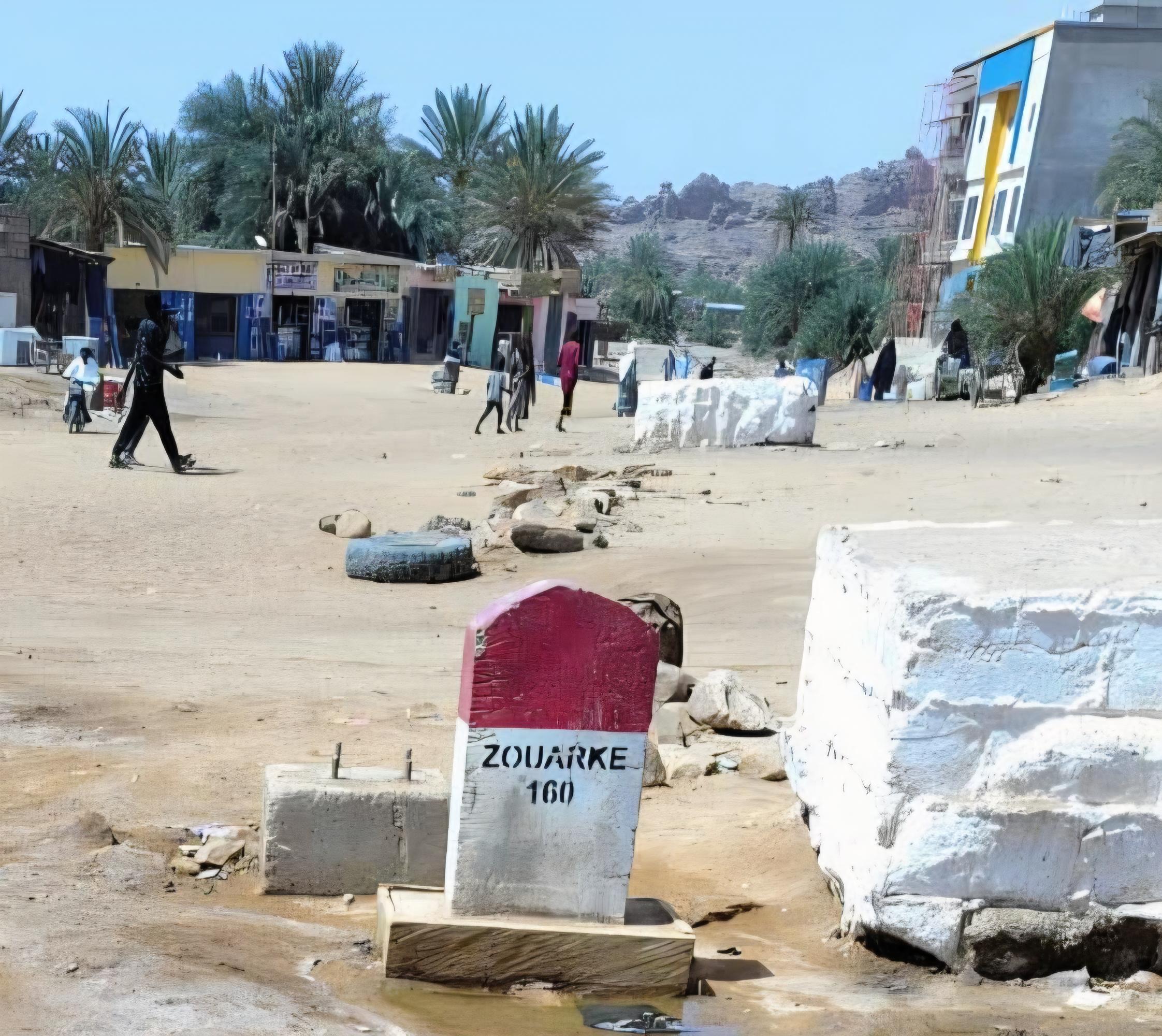
So, what are the big changes in the Tibesti and Bardaï? The town continues to grow and there has been much new building to replace mud brick homes and businesses with buildings made of breeze blocks. There is also a much-improved track and milestones across the mountains to the second biggest town, Zouar. To call it a road would be misleading but it has cut journey times for the 160 km, (100 mile) journey from 8 to 3 hours. Already four women in labour have been referred two needed a caesarean to save the mother, the third was a complicated retained second twin, with eclampsia and excessive bleeding. Improved infrastructure can help save some lives but not all, a fourth woman sadly died en route.
The gold fields seem much more active with JCB’s with the front-loading large shovel full of heavy equipment setting off from the town on a regular basis in convoy with Toyota pickups laden with supplies and young gold diggers. Unfortunately, the violence on the goldfields and towns has also increased, and we have admitted a dozen people all from different incidents with bullet or stab wounds to the abdomen, chest or limbs, six of whom had immediate life-threatening injuries. There were a number of others with minor wounds treated as outpatients.
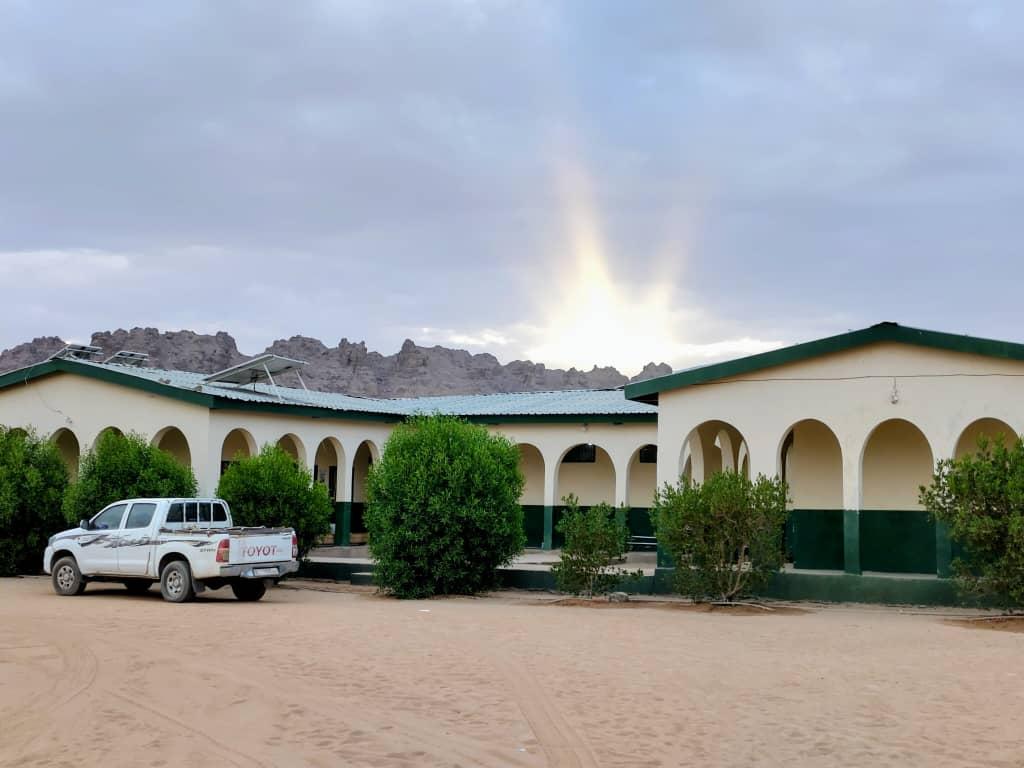
So, it is clear, there is an ever-increasing need for a good hospital to serve the population. Improvements have been made, a very good solar electrical supply which runs air conditioning units in some of the consultation rooms and the pharmacy stock room, powers the autoclaves for sterilisation, as well as a new emergency department and laboratory awaiting the finishing touches and equipment courtesy of a collaboration between the UN agency, International Organisation for Migration and the Ministry of Health. The hospital already has a good water supply, surgical department, maternity, the provincial vaccine supply and a new second ambulance should arrive from the capital by the end of the week. All this sounds very impressive; it does represent a considerable financial investment and yet it is sad that to say that the result is a hospital that is considerably less functional than the sum of its parts.
Take the vaccination service, a baby can only be vaccinated on a Thursday morning between 10 and midday whereas the national program states that every baby that is born should be vaccinated against TB and polio on the day that it is born and general vaccines should be available every weekday.
The operating theatre lacks readiness to deal with emergencies as instruments are no longer maintained sterile ready to use.
The hospital day currently has no official start time, outpatients consultations and treatments are seen as the priority and hospitalised patients are only visited by our colleagues be they doctors or nurses on an ad hoc basis with prescriptions ordered but usually no notes made on the patient chart. Even the seriously sick, are not having their pulse, blood pressure or temperature recorded and drugs are frequently not given.
The pharmacy lacks essential medical supplies such as gloves for ward use and urinary catheter bags and many times the patients’ relatives have to go to the pharmacies in the town to buy medicines. One evening last month, the day before a MAF flight to Bardaï, we discovered that we only had enough ketamine anaesthetic for 3 more operations, we contacted Dr Abdelkerim in N’Djamena by phone at 7am and he was able to contact the regional pharmacy at Faya, the mid Saharan refuelling stop for the plane, to give an emergency supply of 10 bottles to our colleagues at 11 am. A near miraculous event that kept our surgical service running.
There are some reasons for all this disorder, the hospital staff are few in number and hence overworked, they probably don’t believe that it can be any better. The general lack of organisation and planning saps morale and makes matters worse than they need to be and as a consequence resources that are there are not being well managed and used.
In the miracle of the loaves and fish we can see the disciples in crisis without a realistic solution, Jesus told the disciples to make order in the chaos getting the people to sit in groups and then broke the loaves and divided the fish and gave them to the disciples to distribute. Was the food multiplied in the hands of Jesus or the disciples? Either through their obedience and faith the people were fed.
And so, we pray for more staff but also that the staff who are present will try and work together in an organised way getting the equipment ready for use and making sure patients are well monitored and treated. It is possible, we have done it before. Hopefully now that the hospital administrator has come back from Libya and Dr Abdelkerim should arrive next week from N’djamena, we can start to rebuild the basic services of a hospital so that it can become at least the sum of its parts or even more.
We are thankful that we are back at home in Bardaï. We have been fortunate to quickly get the essentials of life sorted, our solar panels working again with supplies from town, we have established a regular weekly water supply and have even got a good supply of gas despite the local shortages. The fresh food on the market fruit, vegetables and eggs are less readily available than before due to fuel shortages, export controls and taxes in Libya; but local market gardens are helping out and our small courtyard garden is already flourishing, plants grow so quickly here. Soon we hope to have lettuce, rocket, spinach, parsley and courgettes. And most importantly we have been welcomed by patients, local visiting officials and people on the street and in their homes, all happy to see us back at the hospital. It feels very good and right to be back living and working here.
Finally, we are grateful to you, for in the same way that the boy who gave the loaves and fish to Jesus, you have enabled the sharing of God’s love and care for the people of the Tibesti. Thank you.
Mark and Andrea